
This May, at the Poetry by the Sea Conference, Allison’s two-day workshop, “Forming the Blues: How Traditional Forms Can Be Transformed by the Blues,” will explore the intersections between poetic form and blues music. Here’s Allison’s take, in her own words, on how “The blues is having a moment.”
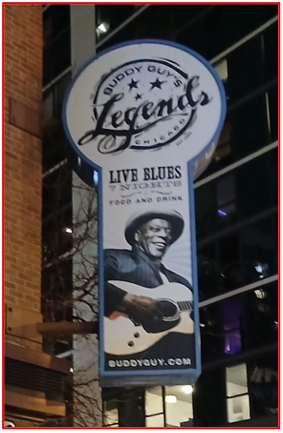
On the day before the 2026 Oscars ceremony, I found myself in Chicago at Buddy Guy’s Legends blues club. Buddy himself was in Los Angeles, where the next evening he and a bevy of music stars would perform an electric tribute to the movie Sinners. I was there to hear Brandon Santini, a rising star harmonica player (“rising star” in blues parlance means Santini has been gigging and performing blues for over two decades).
Blues is about the slow burn, the assertion of self, the realizations of and between musical refrains. Sinners may have grabbed the spotlight in 2026, but the blues itself is eternal—universal and specific, urban and rural, performed in juke joints, in backyards, at festivals, and on cruise ships. Younger blues performers like Brandon, Shemekia Copeland, Kingfish Ingram, Ana Popović, and the sisters Samantha and Amanda Fish are bringing blues tradition to audiences worldwide, while older veterans such as Robert Cray and Bobby Rush are still touring to admiring audiences.
I regularly teach blues—both the poetry and the music—in my classes. I regularly tell my students about the music’s origins in poverty and pain, about its ability to tackle issues of both political and personal importance. It’s a music and a poetry of resistance and resilience. My students learn of the Great Migration and how the music moved when African Americans did—from the Southern rural counties to the big city meccas of Chicago, Detroit, St. Louis, and eventually overseas, where young British men heard the sound and used it on their way to becoming the Beatles, the Rolling Stones, the Yardbirds, and Led Zeppelin, emulating their blues heroes on those early British Invasion records.
Blues poetry takes its heart from the music as well. Contemporary poets such as Tim Seibles, Cornelius Eady, Kevin Young, and the late great Monica Hand continue the legacy of blues poetry that many people mistakenly believe begins and ends with Langston Hughes.
Back at Buddy Guy’s, I danced to Brandon and his band. After the music ended after midnight, I strolled over to a display case full of Buddy’s awards: multiple Grammys, alongside lots of other paraphernalia from an exceptional musical life. I paused to peer at a photo of Buddy with a long-haired older white man before it clicked who that man was: Robert Plant, lead singer of Led Zeppelin, was happily posing with his musical hero, both wearing their Kennedy Center induction rainbow sashes. What goes around eventually comes back as the blues.
What exactly does it mean to “form the blues,” as my workshop title suggests? I’m excited to share a bit of blues legacy with poets in my class who may not have explored it in their work before. I’m excited to hear the blues bear fruit in some new poems generated by the sea. After all, the blues travels everywhere: why not by water in Madison, Connecticut?
Click here for more information about the Conference and to register for Allison’s workshop.